

What Defines a Modern Provider Compensation Platform (and Where Most Fall Short)

Moving provider compensation out of spreadsheets is an important step. However, a software purchase can still leave compensation teams exporting data, maintaining logic in side files, reconciling disconnected systems, and waiting until the end of a period to find problems.
A modern provider compensation platform sets a higher standard. It connects the information behind provider pay, applies approved rules consistently, gives each stakeholder useful visibility, supports governance during the normal course of work, and keeps pace as the organization changes. The objective is to preserve compensation models that are legitimately complex while operating them accurately, transparently, and with less manual intervention.
Timely, accurate compensation is just the baseline
Providers need to be paid accurately and on time. Trust, clear communication, plan changes, and effective forecasting all depend on reliable calculations delivered when teams need them.
Accuracy requires consistent rule application: approved terms, thresholds, rates, and exceptions should produce the same result when the same conditions apply. Ensuring timeliness means reducing the exports, handoffs, rekeying, and manual reconciliation that slow the process and introduce variation.
A purpose-built platform turns compensation into a repeatable, audit-ready process. By preserving the inputs and underlying logic behind every calculation, automation strengthens oversight rather than bypassing it.
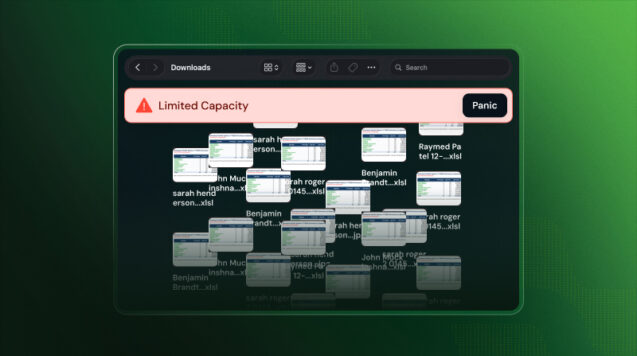
This is where many spreadsheet systems fall short. While the calculation may move into software, teams often end up managing contracts in one system, production data in another, exceptions over email, and final checks in a manual workbook. The interface changes, but the fragmented operating model remains the same.
The core capabilities of a modern provider compensation platform
Provider compensation plans are increasingly complex, with over 60% of physicians now paid through a mix of factors, including salary, productivity, quality, bonuses, administrative work, call coverage, shared pools, and other organization-specific elements. A modern platform must manage these components as one controlled process, connecting integration, automation, visibility, benchmarking, and forecasting through a single source of data and calculation logic.
Connected data and native integration
Connected data means the information behind compensation operates within one workflow. Contract terms, productivity feeds, time submissions, benchmarks, approvals, calculations, reports, and physician-facing information should stay aligned as data moves through the process.
Consider what happens when an organization adds contract management. In a connected platform, approved terms can feed the compensation workflow without creating another manual reconciliation point. In a collection of separate tools, the team is left mapping records, maintaining duplicate fields, monitoring interfaces, and resolving system discrepancies.
When a contract amendment changes a threshold or rate in the middle of a compensation period, the platform should preserve the prior terms, apply the new terms on the correct effective date, and show which version governed each calculation. Forcing teams into side workbooks pushes that operational burden back onto the analysts.
Automated, consistently applied rules
Beyond simply running formulas faster, true automation applies approved rules consistently while maintaining a complete trail of how every number was calculated.
A robust rules framework easily handles tiered structures, multi-source clinical data, mid-period plan amendments, and legitimate exceptions that require approved review. Compensation structures are inherently complex to align with specific clinical, financial, or market strategies. Forcing every model into a rigid template creates new operational bottlenecks. The platform should support complexity through governed configuration while keeping the logic understandable and traceable.
One-off custom code creates a different problem. A vendor may build a custom script for a unique request, but every subsequent plan change turns into another development project. Over time, the organization becomes locked into software that is difficult to test, update, and explain.
Current visibility across the organization
Periodic reports only show past results. Real-time visibility helps teams spot issues and adjust before the pay period closes.
Different stakeholders need distinct views of the same underlying data:
- Compensation analysts need calculation details, data status, exceptions, and reconciliation tools.
- Finance and operations leaders need high-level performance trends, forecasts, and the financial effect of proposed plan changes.
- Compliance teams need access to contract terms, approvals, benchmark comparisons, and audit logs.
- Physicians need transparent, real-time insight into their production, earnings, and progress toward plan thresholds.
Physician trust is difficult to build through a statement that arrives after the period closes and lacks enough detail for independent review. When physicians can review the same production and compensation information used by the compensation team, questions become easier to resolve. The Simpliphy mobile app is one example of delivering that information year-round, in a format physicians can use without waiting for a manual response.
Learn more: Productivity Without Mandates: Why Compensation Clarity Changes Physician Behavior
Benchmarking, modeling, and forecasting
Traditional survey benchmarks provide useful market context, but they are point-in-time references. More current trend data can help teams identify movement earlier and pinpoint where additional review is warranted.
Live benchmarks become significantly more useful when connected directly to active performance and pay data. Compensation teams can compare current results, model tier or rate modifications, and project provider-level and organizational impacts before rolling out new contracts.
Benchmarking still requires human judgment. A percentile alone cannot establish fair market value; it serves as one key input for qualified evaluation. The platform’s role is to make relevant comparisons visible, flag questions, and document the rationale stakeholders rely on to make defensible decisions.
Where legacy approaches commonly fall short
A legacy approach to physician compensation is the traditional reliance on manual spreadsheets, disconnected tools, and patched-together workarounds. Even when wrapped in a modern software interface, an approach is outdated if it depends on manual handoffs, static reporting, opaque calculations, rigid changes, and side workbooks.
Spreadsheets can work for a time, particularly when an organization has fewer providers, relatively stable plans, and limited data variation. But as the organization adds providers, models, feeds, amendments, and exceptions, the burden grows. More people become responsible for checking whether formulas, contract terms, and source data still agree.
Three weaknesses tend to become more visible with scaling:
| Legacy pattern |
Operational consequence |
| Static reporting | Problems surface only after a pay period closes, leaving no room to adjust data or proactively update providers. |
| Limited transparency | Comp teams spend valuable time fielding questions they can’t answer on the spot, forcing analysts to dig back through files and re-model calculations to explain a single number. |
| Rigid architecture | Every plan update or contract amendment requires manual workarounds, vendor development, or new versions of calculation files. |
Custom code or heavily patched point solutions often reproduce these exact same patterns. A custom build might solve an immediate requirement today, but each new plan variation creates another branch of logic to maintain. A system can look modern at implementation and age in place because change becomes slower and harder to govern.
A modern platform becomes the compensation system of record
A compensation system of record connects approved contract terms, source data, calculation rules, outputs, changes, approvals, risk flags, and supporting evidence into a single workflow.
When a physician questions a payment, the compensation team should be able to trace a line from the pay statement directly back through the calculation logic, active rule, source data, and underlying contract term. Similarly, when the compensation committee or compliance team reviews a change, the system should instantly reveal what was updated, who approved it, when it took effect, and which payments it affected.
Having a single source of truth eliminates the need to reconstruct events across spreadsheets, inboxes, shared drives, and separate applications. It also gives everyone a shared factual foundation, while leaving legal, compliance, and valuation decisions to qualified stakeholders.
Governance and risk flagging
Governance works best when it is built directly into the compensation workflow. Role-based access, approval steps, version history, effective dates, and exception review should operate continuously and remain available when a periodic audit begins.
Automated risk flagging is a prime example of proactive governance. A platform might identify a physician whose compensation sits at the 90th percentile while productivity remains at the 70th percentile. The difference can surface a performance question or a potential compliance concern for review.
The flag acts as a trigger for human review. Compensation, compliance, or legal stakeholders still evaluate the specific context and determine the appropriate action.
Auditability and documented change
Auditability means an organization can reconstruct the path to any payment. The record should identify the source data, contract terms, calculation logic, adjustments, approvals, and effective dates involved.
When a platform preserves these details during routine administration, the audit trail becomes a natural byproduct of daily work. Answering internal queries or external audit requests no longer requires custom reporting or forensic research; the documentation is already built into the change record.
Learn More: Connecting Contracts, Compensation, and Compliance: A Conversation with Dan Iliff
Forecasting
A reliable system of record provides a solid foundation for financial modeling. Physicians gain clear insight into current production and projected earnings, while leadership can model the financial impact and provider-level effects of proposed plan changes using the same underlying information.
A forecast built directly on active production data and current compensation models is far more dependable than a standalone projection workbook. Connecting forecasting directly to the operational system ensures forecasts reflect actual physician performance rather than static assumptions.
Physician trust
Physician trust develops when the compensation process behaves consistently and questions can be answered with verifiable evidence. Clear communication sets initial expectations, but month-over-month accuracy is what maintains trust over time.
Physicians should be able to easily understand where current production stands, how their plan applies, and why a specific payment differed from their expectations. At the same time, the compensation team should be able to investigate queries using the same data without translating between systems. That shared visibility makes the process simple to verify on both sides.
How to identify a scalable compensation platform
When evaluating physician compensation platforms, a polished demo of a standard workflow isn’t enough. The true test of a scalable platform lies in how it handles real models and edge cases, such as mid-period amendments, complex exceptions, messy data feeds, and inevitable plan changes.
Look for a platform built around these characteristics:
- Configurable complexity over custom code. The software should support your organization’s actual compensation structures out of the box. You shouldn’t have to water down valid plan terms or pay for custom code that breaks during the next update.
- A unified product across the organization. The vendor should maintain a single, core product codebase for all customers, using governed settings to tailor configurations rather than branching off isolated software forks.
- Adaptable, rule-based automation. Approved rules should apply consistently while giving team members controlled, auditable mechanisms to process exceptions and effective-date amendments.
- Proactive risk detection. Rather than acting as a passive calculator, the platform should incorporate automated data checks and pay variance tracking to flag anomalies, calculation shifts, and potential fair market value risks early, giving teams full visibility into how every exception was reviewed and resolved.
- A partnership, not just software. Compensation teams need support from domain experts who understand healthcare finance, comp plan design, validation, and ongoing change management.
Simpliphy supports most health system compensation models straight out of the box, addressing remaining edge cases through governed, platform-level configuration. The goal is to represent the organization’s real compensation structures without creating brittle, one-off software that must be rebuilt every time a contract changes.
Moving beyond feature checklists to stress-test how a platform handles edge cases reveals whether a system will scale with your growth or simply become your next manual workaround.
Build a compensation platform that evolves with your organization
A modern provider compensation platform is positioned to handle future contract amendments, structural changes, and organizational growth without forcing your team back into manual workarounds.
That long-term scalability depends on how the platform is built. Because Simpliphy runs on a single, continuously maintained codebase, platform enhancements and workflow improvements reach every client automatically, without the cost, delay, or risk of custom software upgrades.
Paired with a support team that deeply understands physician compensation, Simpliphy gives your organization an operational foundation that stays accurate, transparent, and manageable as your plans change.
See how your current workflow compares. Request a demo with Simpliphy to see how our platform handles your organization’s actual compensation models and edge cases.
You may also like:
The Simpliphy Team combines experience in physician compensation, healthcare finance, operations, and technology to help health systems navigate one of their most complex administrative functions. Through practical insights and firsthand experience, our team shares perspectives that help organizations simplify compensation, improve transparency, and make more informed decisions.

Danny McNight is Director of Marketing at Simpliphy, leading the development of campaigns and brand experiences that make complex ideas clear and compelling. With a background in digital creative direction, he helps shape how Simpliphy communicates its value across channels and audiences.