
From Black Box to Clear View: Unifying Physician Compensation and Performance Management
Most physician compensation systems operate under constant friction. Miscalculations occur, contract configurations drift out of sync with actual payments and retroactive adjustments arise. In manual systems, errors are inevitable and result in significant repercussions, from time-consuming payout audits to physician clawbacks that instantly fracture organizational trust.
Even when final payouts are accurate, physicians have minimal visibility into how those numbers were reached. Physicians record clinical work in the EHR, billing teams attribute values to that data through a separate system, and the comp team calculates compensation through complex spreadsheets that were never designed to provide physicians the transparency they need. At the end of this disjointed process, physicians are left without any visibility into how their work translated to pay.
That gap is where physician performance management begins to break down. This article examines how calculation errors and visibility gaps undermine trust, render incentive structures ineffective, and consume operational resources, and what a unified system looks like when physicians and leadership are finally working from the same data.
How physician productivity translates into pay
Understanding where visibility breaks down starts with understanding how physician productivity becomes a paycheck, beginning with the unit most compensation models are built on.
Why wRVUs are the dominant unit of measurement
Work relative value units (wRVUs) are the standard productivity currency in physician compensation because they measure effort, not revenue. Each CPT code carries a CMS-assigned wRVU reflecting the time, complexity, and clinical skill required to perform the service. A level-four office visit generates a different wRVU value than a complex surgical procedure, regardless of what the payer reimburses.
That independence from collections and payer mix is what makes wRVUs useful. Two physicians performing identical clinical work in different markets, or serving different insurance populations, produce the same wRVU totals. The metric isolates physician effort from variables outside their control, which is why it anchors most employed compensation models.
How wRVUs move through contracts, tier structures, and incentives
The wRVU total is just the starting point. From there, contract-specific logic takes over.
Many models work roughly like this:
- Base salary may be tied to a guaranteed wRVU threshold, the production level the salary assumes
- Conversion factor translates each wRVU into a dollar amount above or below that threshold
- Productivity tiers apply different conversion rates at different production bands, with higher volume earning a higher rate per wRVU in some plans
- Bonus calculations may trigger when a physician crosses a defined threshold, sometimes tied to quality metrics or percentile benchmarks
Calculating these totals requires navigating an intricate matrix of data. Comp teams must factor in exact service dates versus posting dates, track shifting contract amendments, reconcile part-time clinical versus academic time tracking, and account for variable shift pick-ups. When these moving variables are managed manually in static spreadsheets, tracking running totals becomes difficult for compensation teams and nearly impossible for physicians.
Physicians typically receive a delayed total alongside a single wRVU figure, missing the step-by-step calculation that connects the two. Without visibility into real-time running totals and proximity to production tiers, physicians lack the information needed to make proactive scheduling decisions during the pay period. The incentive structure exists on paper, but loses its ability to influence daily behavior.
Providing physicians with direct visibility into production, pay, and projected earnings while the performance period is still in motion allows tier structures to function as intended.
|
Condition |
Physician Behavior |
Compensation Outcome |
| Physician can see real-time wRVU totals and tier proximity | Informed decisions about scheduling and shift volume | Tier thresholds function as designed incentives |
| Physician has no visibility into running totals | No behavioral response to tier structure, plus built-up frustration | Incentive model exists on paper only |
| Physician receives delayed, summary-only statements | Reactive disputes after the fact | Analyst time consumed; trust erodes |
Productivity incentives are most likely to influence behavior when physicians can monitor their progress before compensation is calculated.
How physician compensation connects to health system financial performance
Individual physician productivity and organizational financial performance are directly linked, and both sides of that relationship have a stake in the system working accurately.
From the health system’s perspective, physician compensation is among the largest line items in the operating budget for many organizations. How that cost scales with production volume, specialty mix, and contract structure has real consequences for financial sustainability. A compensation model that is not functioning as designed, because physicians are disengaged, because incentives are not driving behavior, or because disputes are consuming analyst capacity, creates financial drag that compounds over time.
From the physician’s perspective, the connection runs the other direction. Their clinical output drives revenue. When the relationship between performance and compensation isn’t transparent, physicians have less visibility into how their work translates into pay, making it harder for the compensation model to reinforce the behaviors it was designed to encourage.
When the system works, both sides benefit. Physicians make informed choices about their schedules and production, while leadership maintains accurate cost modeling and an incentive structure that actively guides performance. That alignment is what a well-functioning physician performance management system is supposed to produce.
Performance tracked in one system, compensation calculated in another
In most health systems, clinical productivity and financial metrics are tracked constantly. Physicians document clinical encounters and enter CPT codes directly into EHR platforms. Operations and practice managers use specialized software to monitor clinic volume and efficiency. Yet despite this abundance of data, connecting daily clinical work to actual pay remains a blind spot.
To turn clinical volume into pay, the physician compensation team must aggregate data across disparate platforms—EHR encounters, billing system collections, time-tracking submissions, and shifting contract term sheets—and calculate compensation through manual spreadsheets. Comp teams occupy a challenging middle ground, straddling the organizational divide between health system leadership and individual medical groups. Managing a web of distinct contracts, tax codes, and operational data inside manual spreadsheets ultimately creates an opaque black box for everyone involved.
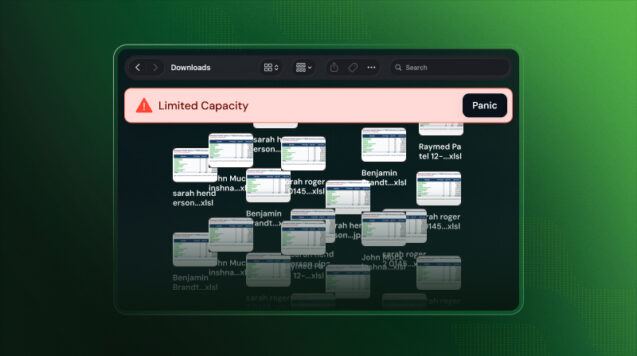
When physicians have questions about their pay, compensation teams often have little choice but to pull detailed spreadsheet exports or manually trace calculations to help explain the numbers. Without clear, visual context, these raw data dumps remain difficult for providers to easily interpret. Confirming a payout figure typically requires reaching out to billing, operations, or compensation teams to manually reconstruct the calculation.
When a physician has no direct way to verify how pay was calculated, an unexpected figure stops reading as an isolated data delay and begins to look like a systemic issue. A missed encounter or a rate discrepancy feeds into broader frustration. Resolving this friction requires moving past static spreadsheets. By automating the compensation logic, health systems can finally connect the operational data everyone already sees with the compensation outcomes that actually drive physician alignment.
What's at stake when physicians can't see their numbers
Distrust becomes a retention problem
Given the sheer complexity of modern healthcare contracts, operational slip-ups across health systems—from overpayments and underpayments to retroactive adjustments—are almost impossible to prevent using legacy tools. These challenges represent a failure of manual infrastructure, not the compensation team. When these errors occur, whether they erode trust depends on whether physicians have a way to see the underlying calculation.
When they don’t, the error doesn’t read as an isolated mistake. It reads as confirmation. Physicians who trained independently and then joined employed models may carry a baseline tension with the organization: only 33% believe leadership has their best interests in mind. One discrepancy, a single missed encounter, or a major clawback becomes evidence that the system isn’t being straight with them. That conclusion is hard to walk back, and it’s usually shared across the entire medical group before it surfaces in a direct conversation.
Physicians don’t always communicate their distrust before acting on it. Compensation transparency rarely shows up in exit interviews as the stated reason for leaving, but it can be the condition that made leaving feel reasonable. And with replacement costs exceeding $500,000 per physician, the financial impact compounds quickly. By the time a physician is weighing outside offers, the trust has already been eroding for months.
Lack of visibility renders incentives ineffective
Productivity tier structures are designed to influence behavior, but a physician with no visibility into their running wRVU total has no information to act on. The incentive exists in the contract, but in practice it is unlikely to have its intended effect. That’s a significant gap, given that nearly 75% of organizations incorporate individual productivity into physician incentive pay.
The same dynamic applies to quality and value-based initiatives. Physicians who have concluded that their compensation data can’t be relied on don’t disengage from these programs out of indifference. They disengage because they’ve lost confidence in the system measuring them. If the production numbers are unreliable, there’s no reason to trust that quality metrics are being tracked any more accurately.
A physician performance management system that can’t be verified by the physicians it measures is closer to a record-keeping tool than a management system.
Compensation disputes drain resources and undermine strategy
When physicians are contesting their compensation, two things happen simultaneously, and both compound over time.
The first is operational. Some organizations end up staffing extra analysts specifically to handle the monthly volume of compensation questions: calls about missing wRVUs, rate discrepancies, updates on recent policy changes, prior period adjustments. That workload is a predictable consequence of limited visibility. When physicians have no way to check their own numbers, every discrepancy becomes a support request.
The second consequence is strategic. Leadership cannot easily build or refine a compensation strategy on data that physicians are actively disputing. The dispute volume becomes the operational reality, and the analytical work the data was supposed to support, including cost modeling, contract design, and incentive calibration, gets pushed aside. Compensation data that isn’t trusted by the people it governs can’t do the strategic work it was designed to do.
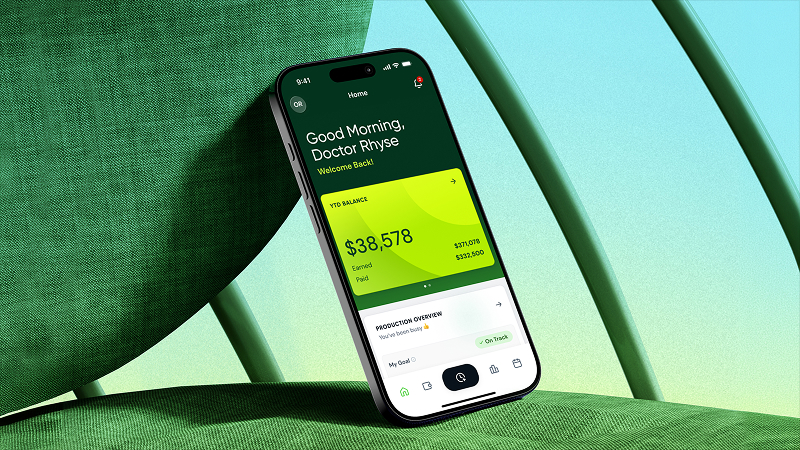
Giving physicians direct, self-service visibility into their compensation data changes that operating pattern. Simpliphy’s mobile app was built for that level of transparency, with real-time views into earnings, production, benchmarking, and compensation-related communication in one place, reducing the need for routine questions to flow back through compensation teams.
What a unified compensation and performance management system enables
Building on a foundation of baseline accuracy
Physician performance management relies on a foundation of precise, automated calculation and data reconciliation. Before an organization can cultivate transparency or cultural alignment, it must eliminate the manual spreadsheet errors that erode credibility.
Automating the math provides the baseline security comp teams and physicians both require. Once calculations, contract term sheets, time-tracking, and encounter attributes are accurately reconciled, health systems can reveal that data through transparent, self-service dashboards. Connecting accurate backend math with real-time visibility is what ultimately enables strategic alignment, predictive forecasting, and restored trust.
Physicians and administrators working from the same data
Much of the back-and-forth in physician compensation stems from a fundamental gap: the two sides of the conversation are evaluating the numbers from completely different perspectives and systems. Physicians see static summary statements, practice managers track clinic volume software, and comp teams manage spreadsheets with complex calculations.
When all parties share a single source of truth, far less time is spent reconciling past calculations, and more time can be spent planning ahead. The conversation shifts from “why is this number wrong” to “here is what we are projecting for the next quarter.” That shift depends on the data being accurate, accessible, and consistent for everyone using it.
Physician compensation and performance management tools that unify contracts, production data, and compensation calculations in one place make that shared visibility possible. The physician sees the same data the comp analyst sees, and that alignment is what changes the nature of the conversation.
Forecasting for physicians, cost modeling for leadership
For physicians, real-time access to wRVU totals and compensation balances makes earnings forecasting possible. A physician who can see where they stand today can project where they will land at year end, adjust their schedule accordingly, and make informed decisions about their own production.
For leadership, the same underlying data supports cost modeling across specialties, contract structures, and production scenarios. Both capabilities depend on the same condition: the data has to be accurate and accessible before compensation is finalized, not after.
When physicians can forecast from their phones instead of waiting for a monthly statement, the compensation model becomes easier to understand and easier to trust. Simpliphy’s mobile app gives providers that visibility while giving leadership a cleaner operational path to the same numbers.
Transparency that gives physicians the answers they need
Transparency changes the nature of compensation conversations by giving physicians the ability to verify their own production and pay. Simpliphy has seen organizations report that providing physicians with this level of visibility substantially reduced the volume of compensation questions directed to analysts. Rather than requesting manual verification, physicians can review the same underlying information themselves.
Many compensation disputes begin when physicians cannot see how their compensation was calculated. Even when the calculation is correct, limited visibility can make routine questions difficult to resolve. When physicians can verify their own production and pay, far fewer questions need to be escalated.
Build trust through transparency with Simpliphy
Trust in physician compensation depends on visibility. Yet the information physicians need to understand and verify their compensation is often scattered across systems that don’t communicate with one another. Clinical work goes into the EHR, attribution runs through billing, and compensation gets calculated manually by physician compensation teams. Without a way to connect those pieces, physicians see the final numbers without the context needed to verify how their work affected their pay.
That fragmentation creates the conditions where trust can break down, incentives lose their effectiveness, and more disputes arise.
Simpliphy brings contracts, production data, compensation models, and benchmarking into one system. By connecting the information that traditionally lives across clinical, operational, and financial workflows, Simpliphy automates complex calculation logic and gives organizations a clear, reliable view into how pay is calculated. When the calculation is accurate, traceable, and the inputs are visible, conversations between physicians and administration become far more productive.
Putting that information directly in physicians’ hands is what turns transparency into day-to-day practice. With the Simpliphy mobile app, physicians can see their wRVU totals, compensation balance, earnings forecast, and peer benchmarking in real time, without a call to the comp team. When physicians have that information themselves, tier structures are easier to understand, questions can be addressed earlier, and the relationship between clinical work and compensation becomes something they can see and trust.
For teams evaluating how to improve transparency in physician performance management, the physician experience is often the best place to start. See how Simpliphy’s mobile app gives providers direct access to their performance and compensation data.
To see how Simpliphy handles complex compensation processes, request a demo and test it with your actual models.
You may also like:

The Simpliphy Team combines experience in physician compensation, healthcare finance, operations, and technology to help health systems navigate one of their most complex administrative functions. Through practical insights and firsthand experience, our team shares perspectives that help organizations simplify compensation, improve transparency, and make more informed decisions.

Danny McNight is Director of Marketing at Simpliphy, leading the development of campaigns and brand experiences that make complex ideas clear and compelling. With a background in digital creative direction, he helps shape how Simpliphy communicates its value across channels and audiences.
The information in this article is for general informational purposes only and does not constitute legal, tax, financial, or compliance advice. Physician compensation arrangements, including fair market value determinations, are fact-specific and regulated under laws such as Stark and the Anti-Kickback Statute; consult a qualified attorney or valuation professional before relying on this information. This article reflects information current as of its publication date and may not account for subsequent changes in law, regulation, or industry practice.